Exercise is the answer to living a long life.

Exercise is probably the single best way to extend lifespan.

You need to exercise as if your life depends on it.

Because it does.

Here’s why…

When someone says that they ‘want to get fit’ - what does this mean?

How you exercise if you want to be an Olympic-level sprinter compared to run-in 5km at the weekends is very different.

So, when you say you want to get fit, to what end?

You should base your life goals on lifespan and health span:

  • to be an active and capable 90 year old?
  • to win at the ‘game of life’?

If I reach 90 years of age, I do not expect to be exercising at my current level but I do hope that I will be able to pick up my grandchildren or put my travel bag in the overhead compartment of an aircraft unassisted.

The longevity physician, Peter Attis, calls this Training for the Centenarian Olympics.

If you reach 90-100 years of age with your cognitive capabilities intact, what ‘Centenarian Olympic’ events will you want to compete in?

When you answer this question, you can then answer what it means to be ‘fit’ at 90.
But more importantly, how additionally fit you need to be now so that when your performance declines to that level, you know how much better it needs to be in advance.

If your goal is to be a kick-ass 90-year-old, you can’t settle for being an ‘average’ 50-year-old.

Now that we know our goal, we can start looking at some metrics that match this objective. The bottom line is that we aim not to die from ‘anything’ earlier than we had planned. This is known as reducing ‘All-Cause Mortality.

If an intervention reduces the risk of heart disease but causes a matched increase in serious cancers, then it is unlikely to extend your life. It will simply change what is written on your death certificate.

Best predictive ability on all-cause mortality:

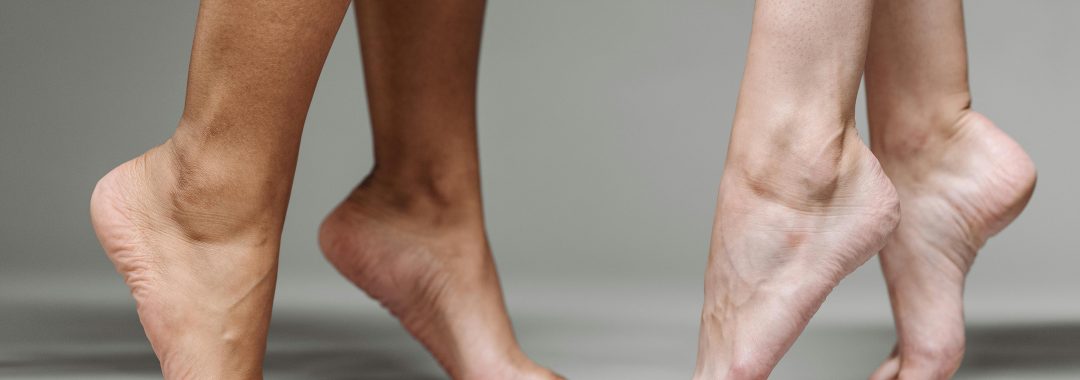
How about standing on one foot unassisted for 10 seconds?
Sounds easy right?

Yet, about 20% of people in their early 60s cannot do so.
By age 70, that number has increased to 50%.
When most people reached their early 80s, that number is now close to 90%.

If you could perform the 10-second one-leg stand the probability of you being alive seven years later was over 90%.

If you couldn’t do the one-leg stand, that number dropped to just over 65%, a huge difference.

How about another simple but very telling test?

Grip Strength.

For every 5kg drop in grip strength, all-cause mortality increases by 15-20%

VO2 Max

Now let’s talk fitness.

VO2 Max is the maximum amount of oxygen your body can utilise during exercise. It i a standard measure of aerobic fitness. Specific aerobic training methods can increase this number specifically

Compared to those in the highest 2.5% VO2 Max category, those in the lowest 25% category are 5 times more likely to die over 10 years. There is practically nothing in medicine that results in this magnitude of survival advantage.

This is an enormous difference.

Most individuals can get into the top 2.5%VO2 Max category with appropriate training,

The persons included in the study referenced were normal individuals, not elite athletes. Most people reading this will likely feel they are not in the top 2.5% but probably somewhere above average.

So let’s define what was considered the bottom 25%. `not average, but ‘low’ fitness.
For a female in their mid-50s, low roughly equated to not being able to play a game of racquetball. For a male in their mid-50s low equated to not being able to play a game of basketball.

Do you still think that you are in the ‘average’ group?

Above average for the same age categories equated to comfortably running at 10km/hour for females and playing a game of competitive soccer for males.

Very quickly, people realise that their idea of ‘average’ often does not match the real ‘average’.
If we aim to be above-average 90-year-olds, we can’t get there if we are only average 50-year-olds.

When it comes to exercise, you need to treat it like your life depends on it.

Because it does…….

Corona_virus

Covid 19 – What to expect when you come for an appointment

New patients who have never had Physio before are often filled with a little trepidation when coming through our door, as they have no idea what to expect.  With the current madness of Covid 19, a visit to the Physio has changed for all of our patients.  I thought that I would you share with you what you should expect from a visit to the Physio as Lockdown unfolds and we are able to see patients again.

Continue reading

Physiotherapy and Covid 19

Corona_virus

Physiotherapy and Covid 19 – should we be treating patients?

Physiotherapy is a touching profession, so directions to practice physical distancing and avoid person-to-person contact during the COVID-19 pandemic don’t translate well when applied to physiotherapy treatment. As this pandemic has unfolded, direction to physiotherapists has centred around maintaining a safe practice environment through enhanced cleaning practices, increasing social distance in waiting rooms and treatment spaces, and encouraging those who are ill, both patients and physiotherapists alike, to stay home.

As a result of Public Health England and Government advice, private practice physiotherapy clinics and other physiotherapy businesses were encouraged to close at the end of March except when providing emergency and urgent services.  Ashburton Physio closed a few days before lockdown as we felt that continuing was unsafe for both patients and clinicians.

Continue reading

Couch to 5k – I think the sunshine has gone to my head!

Couch to 5k

Couch to 5k has been on my mind for some time.  Many of you will know that whilst I bang on a lot about how good exercise is for you, I haven’t always practiced what I’ve preached. I have learned all the excuses for not doing it from my patients over the years.   For the past 14 months, I have been going to a personal trainer every week which has inspired me to do some exercise at home and use an exercise bike.  Without a doubt, I am a lot fitter for it, and a little thinner.  But, I reward myself with food, which means that the more I exercise, the more I feel that I ‘deserve’ that glass of wine or Ginger Nut!

Continue reading

Cycling Injuries – Common Myths

Cycling injuries – Five Common Myths

and why they might be wrong

Below we discuss the most common pitfalls to be aware of when it comes to finding the causes and best treatments for Cycling Injuries.  As keen cyclists always hungry to improve, we get our information from all kinds of places; other riders, magazines and the professionals we see on TV, but how do we know what we’re doing is right, and best for us personally?

When it comes to Cycling Injuries, according to the experts, there are some commonly held misconceptions that could mislead us, the kind that we see here at Ashburton Physio most regularly when patients present with cycling injuries or pain which refuses to go away.

There is so much stuff out there, which when we take time to reflect on it, there isn’t much evidence for. It is really important that we question things,  easy answers are not necessarily the right ones. In every setting, we have to ask ‘does this make a difference to me?’”

Continue reading

Achilles Tendinopathy – what should you do?


What is Achilles tendinopathy and what causes it?

Achilles tendinopathy is a condition that causes pain, swelling and stiffness of the Achilles tendon. It is thought to be caused by repeated tiny injuries (known as microtrauma) to the Achilles tendon. After each injury, the tendon does not heal completely, as should normally happen. This means that over time, damage to the Achilles tendon builds up and Achilles tendinopathy can develop.

This is a subject close to my heart at the moment as I am experiencing symptoms.

The Achilles Tendon can be found just above the heel bone, it attaches the calf muscles, Gastrocnemius and Soleus to the heel.

There are a number of things that may lead to these repeated tiny injuries to the Achilles tendon. For example:

  • Overuse of the Achilles tendon. This can be a problem for people who run regularly. (Achilles tendinopathy can also be a problem for dancers and for people who play a lot of tennis or other sports that involve jumping.)
  • Training or exercising wearing inappropriate footwear.
  • Having poor training or exercising techniques – for example, a poor running technique.
  • Making a change to your training programme – for example, rapidly increasing the intensity of your training and how often you train.
  • Training or exercising on hard or sloped surfaces.

Continue reading

SHIN SPLINTS

Shin Splints or Medial Tibial Stress Syndrome (MTSS) is a common injury amongst runners.

Like so many of the running injuries we see in clinic every day, Shin Splints is classed as an ‘overuse injury’. It does appear in other sports but is certainly much more prevalent in runners.

SYMPTOMS OF SHIN SPLINTS

In typical cases of Shin Splints, pain is usually felt two-thirds of the way down the shin bone (Tibia), just off the inside edge of the bone.  In the early stages of the condition, pain is usually felt at the beginning of a run and then subsides during the training session itself. Commonly, symptoms also tend to reduce a few minutes after a run session has finished.

As the injury gets worse the pain can be felt when walking and at rest.

It is often painful when direct pressure is applied to the inside border of the tibia. Occasionally some swelling can be present.

Continue reading

Frozen Shoulder

Frozen Shoulder is a common cause of shoulder pain, particularly within middle-aged patients. Indeed, in Chinese medicine, Frozen Shoulder is known as ’50-year-old shoulder syndrome’. It is also known as ‘Adhesive Capsulitis’ meaning a ‘Sticky Capsule’ and more recently is coined a ‘Contracted Frozen Shoulder’. It is slightly more common among females than males and is more likely to occur following an injury to the shoulder and is more commonly seen in patients with certain medical conditions such as diabetes. Often there is no cause or explanation for why a Frozen Shoulder occurs.

Typically, Frozen Shoulder often starts slowly, with quite severe pain, often in the upper arm, which then develops into pain with severe stiffness and loss of range of motion at the shoulder region. Patients more often complain that they are having difficulty sleeping due to the pain. The loss of movement most often associated with a frozen shoulder affects the ability for patients to externally rotate their shoulder (turn their shoulder outwards) and therefore patients see a severe restriction of certain movements such as washing their hair or reaching their arm into their coat sleeve.

Continue reading

Back Pain and Physiotherapy

Lower Back Pain (lumbago) is particularly common, although it can be felt anywhere along the spine – from the neck down to the hips. In the case of lower back pain, statistics show that 80% of the population have suffered from some complaint in this area.

The scary statistic is that of this number, 80% of the injuries will reoccur within three years. Often the reoccurrence rates increase, eventually resulting in constant pain. In most cases, the pain isn’t caused by anything serious and will usually get better over time. Patients need to learn how to manage their symptoms to avoid the pain returning.  This is where Physiotherapy comes into its own. Whether back pain rules your life or you just get an occasional twinge, physiotherapy should be able to help you, and hopefully, help recurrences.

Continue reading

Headaches – Physio and Acupuncture

A Headache is a pain in the head due to varying causes. Headaches may result from any number of factors, including tension; muscle contraction; vascular problems; withdrawal from certain medications; abscesses; or injury.

Headaches fall into three main categories:

Cervicogenic, Tension-type and Migraine.

  • Cervicogenic or Neck-related headaches are the most recently diagnosed type of headache and are musculoskeletal in nature. They may be caused by pain in the neck or spine that is transferred to the head. Many times, neck related headaches go undiagnosed because of their recent classification.
  • Tension-type headaches are the most frequent. Patients who endure tension-type headaches usually feel mild to moderate pain on both sides of the head. The pain is usually described as tight, stiff or constricting as if something is being wrapped around your head and squeezed tightly.
  • Migraines affect far fewer people than tension-type headaches and have a much shorter duration, their symptoms are much more severe. They typically affect women more frequently than men, with pain that usually occurs on one side of the head. Migraines can be so severe that they can cause loss of appetite, blurred vision, nausea and even vomiting.

Continue reading